A water softener removes the calcium and magnesium that cause scale. A filter removes something specific, such as sediment, the chlorine taste of city water, or iron. Many homes need one, some need both, and a water test tells you which. At Gold Seal a whole-house filter starts from $987 and a premium water softener from $3,353, installed.
What is the difference between a softener and a filter?
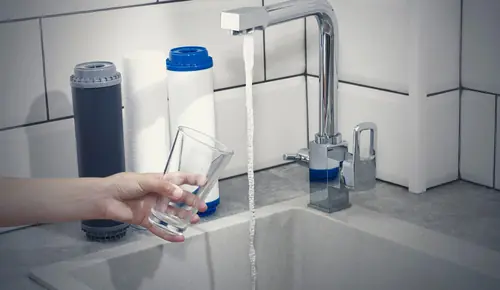
They solve different problems. A water softener trades the hardness minerals, calcium and magnesium, for sodium or potassium, so they stop leaving scale. A filter catches or absorbs something specific: sediment, the chlorine taste of city water, iron, or, with reverse osmosis, a wide range of dissolved contaminants in your drinking water.
| What you notice | What usually fixes it |
|---|---|
| White scale on faucets, shower glass and in the water heater | A water softener, or a salt-free scale conditioner |
| Soap that will not lather, spotty dishes, stiff laundry | A water softener |
| Chlorine taste or smell | A carbon filter |
| Sand, grit or cloudy water | A sediment filter |
| Orange or brown stains in tubs and sinks | An iron filter ahead of the softener |
| Better drinking water at the kitchen sink | A reverse osmosis system |
| A rotten-egg smell from the hot water only | Usually the water heater, not the water. Call us before buying treatment |
How do I know if I have hard water?
The everyday signs are white scale on faucets and shower doors, soap that will not lather, spots on glassware, stiff laundry and dry skin and hair. Hard water also leaves scale inside water heaters and appliances, which shortens their life.
Hardness varies from one water system to the next, so we do not quote one number for the whole area. Your water provider’s yearly water quality report may list it, and a test at your tap gives the actual figure, so treatment is sized to your water instead of guessed.
What about salt-free water conditioners?
Salt-free conditioners, such as the Watts OneFlow and Zilmet ActivFlo systems we install, are designed to keep hardness minerals from sticking as scale. They use no salt. They do not remove the minerals, so the water will not feel softer and soap will lather the same. If scale is your main complaint, a conditioner can be enough. If you want soft water, choose a softener.
What do water softeners and filters cost?
| System, installed | Starting price | Members |
|---|---|---|
| Whole-house filter, 10-inch housing | From $987 | $888 |
| Whole-house carbon filter, 20-inch housing | From $1,097 | $797 |
| Whole-home scale conditioner, Zilmet ActivFlo, 3/4 inch | From $1,278 | $1,150 |
| Under-sink reverse osmosis, Watts | From $1,622 | $1,460 |
| Salt-free descaler, Watts OneFlow, 3/4 inch | From $1,635 | $1,471 |
| Premium water softener, 1 inch | From $3,353 | $3,018 |
| Premium water softener with carbon filter, 1 inch | From $3,701 | $3,331 |
Gold Seal flat-rate book, 2026. Filters, cartridges and media need replacing on a schedule, and replacements are priced in the same book.
How much upkeep does each one need?
- Softener: keep salt in the brine tank and have the settings checked once a year, so it does not regenerate more often than your household needs.
- Whole-house filters: change the cartridges on the maker’s schedule, sooner if the water pressure drops.
- Reverse osmosis: change the filters on schedule. Watts replacement cartridges start from $427.
- Salt-free conditioners: replace the cartridge or media on the maker’s schedule.
Do I need water treatment on city water?
Not for safety. City water is treated to drinking water standards. Many homes on city water still add a softener for scale, or a carbon filter for taste. The right answer depends on your water and what bothers you about it, which is why we start with a test.
 Written by the Gold Seal team
Licensed plumbing contractor · WA L&I GOLDSSM799MG · ID DOPL PLB-C-8717 · updated October 28, 2026