Disconnect garden hoses before the first freeze and insulate pipes in crawl spaces, garages and outside walls. On the coldest nights, open the cabinet doors under sinks and let the faucet on the coldest wall drip. If the house will sit empty, keep the heat on or have it winterized. At Gold Seal, thawing a frozen pipe starts from $255.
Which pipes freeze first?
Pipes freeze where cold air reaches them and house heat does not. In Spokane and North Idaho homes that usually means:
- Hose bibs, and the pipe just inside the wall behind them
- Pipes in crawl spaces, especially near vents and along the outside walls
- Pipes in unheated garages and in exterior walls
- Kitchen and bathroom sink lines on an outside wall, behind closed cabinet doors
- Water lines under mobile and manufactured homes
What should I do before the first freeze?
- Disconnect every garden hose. A hose left on traps water in the bib, and it is one of the most common causes of a burst hose bib here.
- If a hose bib is not frost-free and has a shut-off valve inside, close it and drain the bib.
- Insulate exposed pipes in the crawl space, garage and attic with foam pipe sleeves.
- Close or cover crawl space vents for the coldest months, and seal gaps where cold air gets in.
- Find your main water shut-off and make sure it turns. If a pipe bursts, it is the first thing you need.
What should I do on the coldest nights?
- Open the cabinet doors under sinks on outside walls so warm air reaches the pipes.
- Let the faucet on the coldest run drip, hot and cold. Moving water is slower to freeze.
- Keep the heat at the same temperature day and night.
- Keep the garage door closed if water lines run through the garage.
How do I keep pipes from freezing while I am away?
Keep the heat on, no lower than 55 degrees, and have someone check the house. For a cabin, a rental or a house that will sit empty all winter, the safest choice is to have it winterized: the water is shut off and the plumbing drained, so there is nothing left in the pipes to freeze. In spring we put it back in service.
| Home | Winterize | De-winterize in spring |
|---|---|---|
| 1½ baths | From $1,108 | From $766 |
| 2½ baths | From $1,406 | From $893 |
| 3½ baths | From $1,577 | From $1,021 |
Gold Seal flat-rate book, 2026. Winterizing the outside hose faucets alone starts from $255. Quality Service Club members pay 10% less.
What do I do if a pipe is already frozen?
- Open the faucet the pipe feeds, so water can run as the ice melts.
- Warm the pipe gently with a hair dryer, or a space heater kept a safe distance away. Never use an open flame.
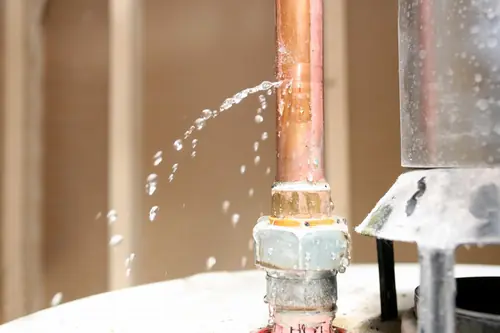
- Check the pipe for a split once it thaws. A frozen pipe often leaks only after the ice melts.
- If you cannot find the frozen spot or cannot reach it, call us. We thaw pipes with heat guns and electric thawing machines.
What does it cost to thaw or repair a frozen pipe?
| Job | Starting price | Members |
|---|---|---|
| Thaw a frozen water pipe with a heat gun | From $255 | $230 |
| Thaw with an electric thawing machine, minor | From $511 | $459 |
| Thaw with an electric thawing machine, major | From $1,021 | $919 |
| Replace a burst hose bib with a frost-free one | From $422 | $380 |
| Repair a leak in exposed 1/2 to 1 inch pipe | From $573 | $516 |
| Repair a leak in crawl space or attic piping | From $1,334 | $1,200 |
Gold Seal flat-rate book, 2026. Rates for after-hours work differ from weekday service, and we tell you the rate before we head out.
Is a frost-free hose bib worth it?
For most homes, yes. A frost-free hose bib closes its valve inside the heated part of the wall, so the water stops where it cannot freeze, as long as the hose is disconnected. Installing one starts from $422 where the bib is easy to reach.
 Written by the Gold Seal team
Licensed plumbing contractor · WA L&I GOLDSSM799MG · ID DOPL PLB-C-8717 · updated October 28, 2026